

President Trump said Sunday night he has "no problem" with a Russian oil tanker off the coast of Cuba delivering relief to the island, which has been brought to its knees by a U.S. oil blockade.
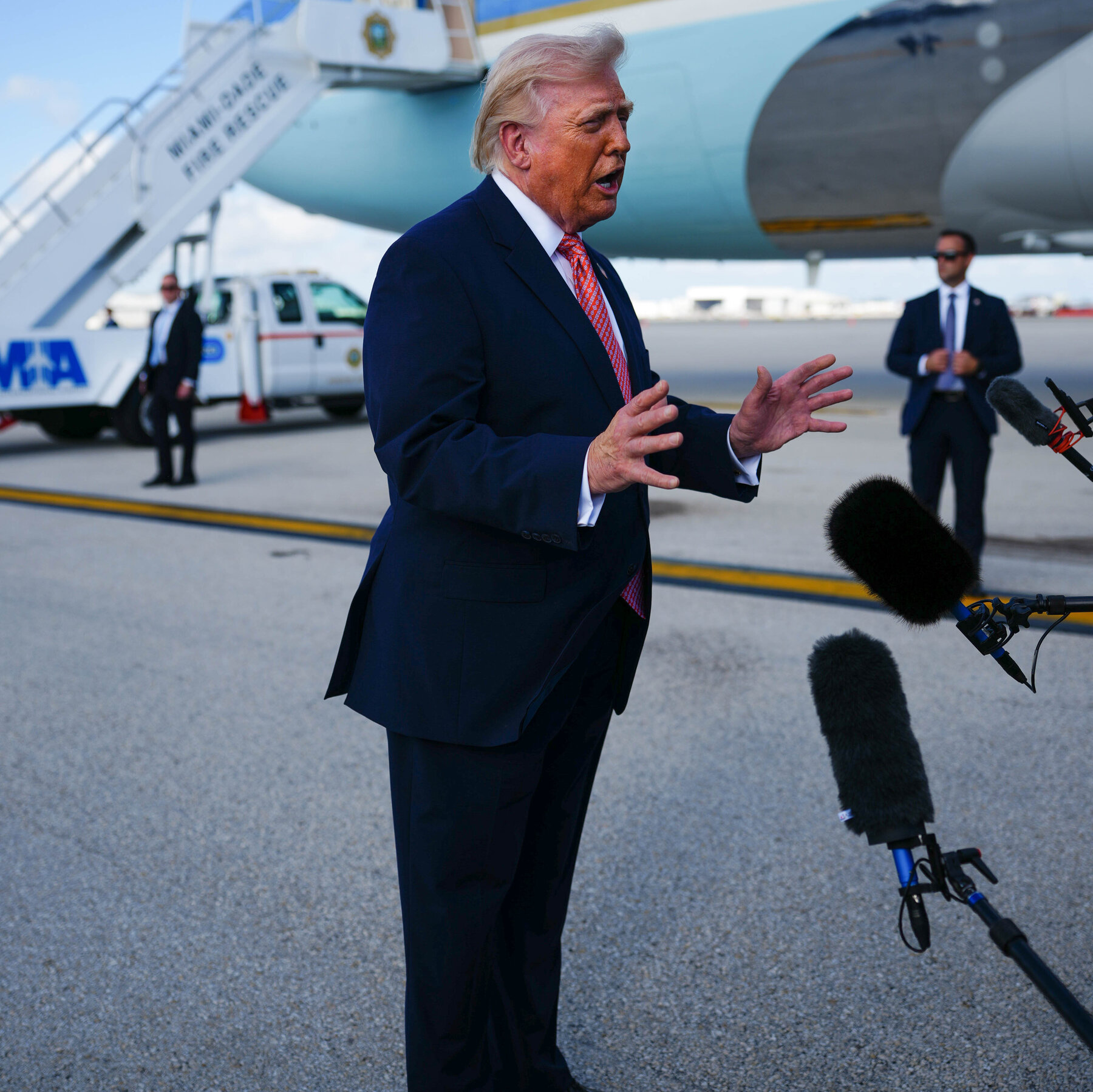
"We have a tanker out there. We don't mind having somebody get a boatload because they need… they have to survive," Mr. Trump told reporters as he flew back to Washington.
When asked if a New York Times report that the tanker would be allowed to reach Cuba was true, Mr. Trump said: "I told them, if a country wants to send some oil into Cuba right now, I have no problem whether it's Russia or not."
On Monday, Russia's Transport Ministry said the oil tanker Anatoly Kolodkin arrived at the Cuban port of Matanzas carrying "humanitarian supplies" of about 730,000 barrels of oil.
The vessel is sanctioned by the United States, the European Union and the United Kingdom following the war in Ukraine.
Kremlin spokesman Dmitry Peskov said Monday that Russia had previously discussed its oil shipment to Cuba with the United States. "Russia сonsiders it its duty not to stand aside, but to provide the necessary assistance to our Cuban friends," he told reporters.
Cuban state media said it was scheduled to arrive Monday at Matanzas, in western Cuba.
Shipping data showed it sailing off Cuba's northeast coast on Monday but it wasn't immediately clear whether it had docked, French news agency AFP reported.
Mr. Trump, whose government has come at its Caribbean adversary more aggressively than any U.S. government in recent history, has effectively cut Cuba off from key oil shipments in an effort to force regime change. The blockade has had devastating effects on the civilians Mr. Trump and Secretary of State Marco Rubio say they want to help, leaving many desperate.
Island-wide blackouts have roiled Cubans already grappling with years of crisis, and lack of gasoline and basic resources has crippled hospitals and slashed public transport.
Experts say the anticipated shipment could produce about 180,000 barrels of diesel — enough to feed Cuba's daily demand for nine or 10 days.
Island-wide blackouts have roiled Cubans already grappling with years of crisis, and lack of gasoline and basic resources has crippled hospitals and slashed public transport.
Cuba has long been at the heart of a geopolitical tug-of-war between the U.S. and Russia, dating back decades. Mr. Trump on Sunday dismissed the idea that allowing the boat to reach Cuba would help Russian President Vladimir Putin.
"It doesn't help him. He loses one boatload of oil, that's all it is. If he wants to do that, and if other countries want to do it, it doesn't bother me much," Mr. Trump said. "It's not going to have an impact. Cuba's finished. They have a bad regime. They have very bad and corrupt leadership and whether or not they get a boat of oil, it's not going to matter."
He added: "I'd prefer letting it in, whether it's Russia or anybody else because the people need heat and cooling and all of the other things."
Mr. Trump has repeatedly hinted at further U.S. action against Cuba, saying on multiple occasions, including Sunday night, that the Caribbean island is "next."
"Cuba's a mess. It's a failing country, and they're going to be next," Mr. Trump said. "Within a short period of time, it's going to fail, and we will be there to help it out. We'll be there to help our great Cuban Americans out who were thrown out of Cuba."
The U.S. blockade has also prompted civilians from outside Cuba to take matters into their own hands, setting off on dangerous missions to deliver aid.
Two sailboats that departed from Mexico carrying aid to Cuba as part of the Nuestra América Convoy landed in Havana on Saturday afternoon after they had gone missing following their March 20 departure. Adnaan Stumo, the coordinator of the aid convoy, said they were "never in any serious danger," but were forced to take a longer route to avoid bad weather.
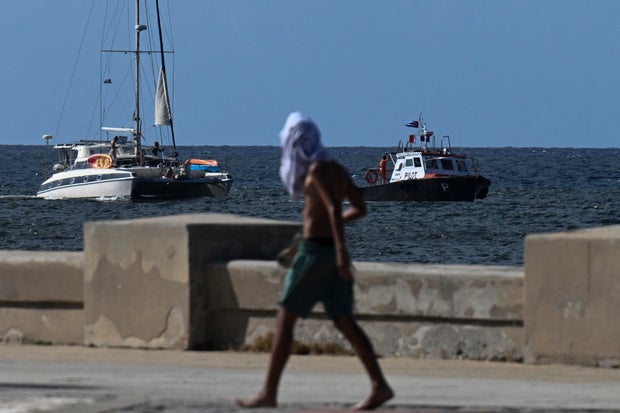
A Mexican navy aircraft found the sailboats about 80 nautical miles northwest of Havana, Cuba, the navy said on X. The navy then helped escort the boats to Havana.
"We arrive with a simple but powerful message: solidarity with the Cuban people doesn't stop at borders. It crosses oceans," Stumo, a U.S. citizen, said. "Over the past week, our sailboats encountered difficult conditions at sea, during which we lost contact with convoy coordinators and maritime authorities alike."




-3.png)