

NEW DELHI — India has approved a massive $25 billion military modernization package that includes procuring new air-defense missile systems from Russia as well as remotely piloted strike platforms and transport aircraft.
The recent approvals represent a push to strengthen the country’s air defensive and offensive capabilities to bolster its preparedness for new-age warfare in which air power is taking center stage, according to analysts. New Delhi faces adversaries China and Pakistan along its northern and western borders. Its long frontier with Myanmar on the country’s eastern flank is also unstable.
The decision to acquire five additional S-400 Triumf air defense systems from Russia is among the key approvals by the Defense Acquisition Council headed by Defense Minister Rajnath Singh. These will be on top of five S-400’s India ordered in 2018 — three are deployed along its northern and western borders, while two are scheduled to be delivered this year.
RELATED
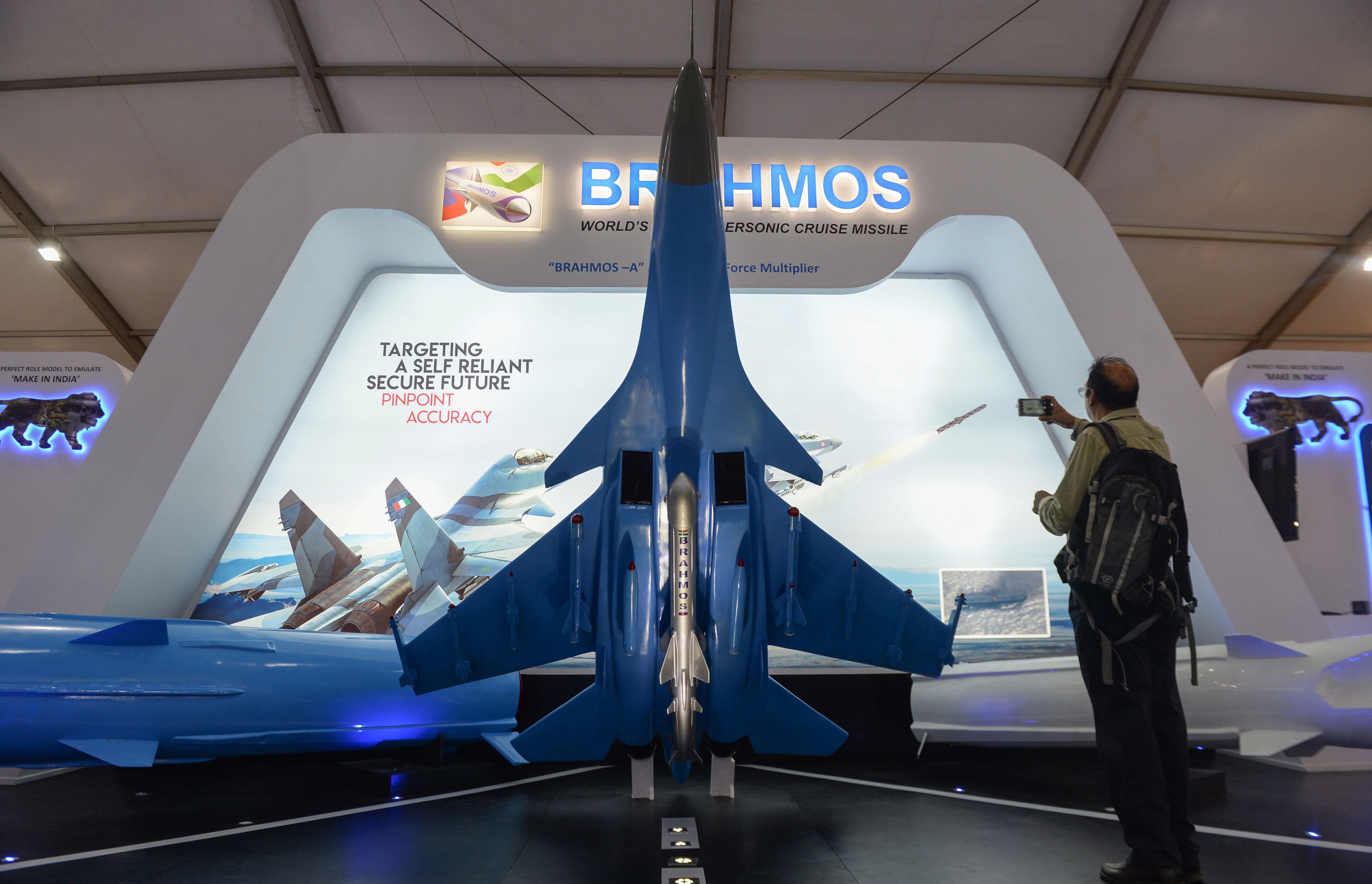
The ten systems will eventually become the linchpin of India’s long range air defense. The additional platforms aim to plug coverage gaps when they are fully deployed.
The approval for the S-400’s comes nearly a year after the system, which can engage aerial threats including aircraft, drones and cruise missiles at extended ranges, played a crucial role during the brief India-Pakistan conflict last year, reinforcing confidence in its capabilities. Missile strikes and drones were extensively deployed during the four day hostilities.
“The S-400’s have proven their worth by intercepting aerial threats and bringing down some of the missiles fired by Islamabad, so now India knows it works well,” said Dinakar Peri, a fellow in the Security Studies program at Carnegie India. “By getting more of these systems, India will widen the perimeter of its air defense.”
Meanwhile, India’s decision to buy 60 more remotely piloted strike aircraft to strengthen its offensive capabilities signals the growing emphasis on unmanned operations in warfare, say experts. Undertaking strikes without putting pilots at risk, they have played a key role during recent conflicts.
“There is a fundamental shift in warfare. While you have your frontline platforms such as bombers and submarines, you also need to factor in the huge part played by drones in battlefield tactics,” said Peri. “That is the lesson military planners have learned from recent conflicts. In fact the Russia-Ukraine war in a sense prepared India for its own conflict with Pakistan last year – it demonstrated the importance of drones and air defenses.”
RELATED
The defense ministry said in a statement that the approvals are intended to strengthen both offensive and defensive air capabilities. “The S-400 system will counter enemy long-range air vectors targeting vital areas, while remotely piloted strike aircraft will enable offensive counter and coordinated air operations, along with intelligence, surveillance and reconnaissance roles.”
India recently signed a $47 million contract for procurement of the Tunguska air defense missile system from Russia to fill a gap in short-range air defense. These aim to protect ground forces from low-altitude threats such as helicopters, drones and cruise missiles.
A chunk of the new funding package will be directed towards acquiring 60 new multirole transport aircraft that will replace the country’s aging fleet. From high mountains to strategic islands that lie far away from the mainland, Indian troops are deployed across a varied geography. The likely contenders for these could be Brazil’s Embraer, US-based Lockheed Martin and Russia’s Ilyushin aircraft, according to media reports.
Experts say the recent budget approvals demonstrate that despite Russia’s share of Indian defense imports declining, as New Delhi also begins to buy equipment from countries like France, Israel and the United States, Moscow remains a key supplier of military equipment.
“There are several reasons for this. For one, Russian equipment is relatively cheaper and it is very hardy. You can operate it anywhere from the minus temperatures in the mountains to hot deserts,” said Rahul Bedi, a defense analyst in New Delhi. “Also, the Indian military is very familiar with Russian equipment.”
The recent $25 billion military acquisition approvals reflect a record surge in defense spending, coming six weeks after India also cleared the purchase of 114 Rafale fighter jets estimated to be worth around $40 billion.
While many of the planned acquisitions were pending for years, the new emphasis on air power in conflicts has injected a sense of urgency amid intensifying global uncertainties.
“There is a marked reluctance on part of countries to put boots on the ground, and fight land wars. Although this is inescapable to some extent, the tendency is to avoid that to the extent possible, so that is where air warfare becomes important,” according to Amit Cowshish, a former financial adviser for acquisition for India’s Defence Ministry.
Although India is the world’s fifth-largest military spender and second-largest arms importer after Ukraine, according to the Stockholm International Peace Research Institute, modernizing its armed forces still represents a challenge.


-3.png)